The Art of Playing Together
In this professional learning workshop educators will enhance their abilities, skills, and repertoire to create culturally inclusive learning environments through the exploration of “percussion of the world”.
World percussion is a fundamental guiding principle that teaching artist Hector Morales calls “The Art Of Playing Together.” Because the percussion ensemble offers multiple opportunities for students to engage, it is naturally an inclusive space. By understanding how it works and learning how it manifests in different cultures around the world, educators will be able to provide different “ways” for their students to experience music, appreciate a variety of cultures (Afro-Peruvian music, Brazilian, Middle Eastern, Indian and Avant-Gard classical) and encourage them to bring their own culture(s) into the collective learning experience.
Using buckets as the main percussion instruments, participants will learn fun activities to transform a class into an ensemble of Afro-Peruvian music, Hip-Hop, Brazilian batucada, Middle Eastern, and/or Avant-Gard classical percussion group. Participants will explore ways to mindfully adapt Eurocentric and traditional forms so they can successfully nurture culturally responsive arts education. These techniques will include the use of traditional instruments (cajon, cajita, quijada, ago-go bells, tamborim, darbuka, tal, manjeera or taal), technology, and standard music notation.
Educators will:
- Experience the musical talents of Peruvian Percussionist Hector Morales
- Learn culturally specific terminology used in Afro-Peruvian music, Brazilian batucada, Hip-Hop, Middle Eastern, Indian and avant-Gard classical percussion ensembles including, Festejo, landó, guapeos, contrapunto, freestyle, batucada, paradinhas, Iqa’, Tala, Bol etc
- Engage with a variety of traditional instruments including: Cajon, cajita, quijada, ago-go bells, tamborim, darbuka, tal, manjeera or taal.
- Use technology to adapt/expand traditional practices by using modern mediums for example the use of Garageband (compose music), On-line sites/apps like Music Lab or Xylo to play/create music, the use of interactive online resources like Google Doodles to help integrate the learning of musical skills with appreciation of cultural background.
- The use of standard music notation to support student learning and understanding of non-western musical traditions.
- Consider how the history of the stories of artists in the explored styles (Susana Baca, DJ Kool Herc, Evelyn Gleene bet. etc.) nurtures insight into the themes of othering, emotional vocabulary, imagination, resilience, critical thinking, and problem-solving.
- We will look into specific books, websites and videos that will engage and help students understand the cultures that shaped the lives of these artists and the styles they originated from. Establish criteria that allow them to apply session skills and understanding to their teaching and learning practice.
YA Connections
NJSLS-VPA:
- Creating: Participants will generate and conceptualize ideas as they engage with the selected elements of music education.
- Performing: Participants will perform percussion compositions.
- Responding: Participants will use art form specific vocabulary and lived experience to analyze and interpret musical expressions.
- Connecting: Participants will make connections to history and personal lived experience.
Professional Standards for Education
1. Standard One: Learner Development
The teacher understands how learners grow and develop, recognizing that patterns of learning and development vary individually within and across the cognitive, linguistic, social, emotional, and physical areas, and designs and implements developmentally appropriate and challenging learning experiences.
i. Performances: (1) The teacher regularly assesses individual and group performance in order to design and modify instruction to meet learners’ needs in each area of development (cognitive, linguistic, social, emotional, and physical) and scaffolds the next level of development. (2) The teacher creates developmentally appropriate instruction that takes into account individual learners’ strengths, interests, and needs and that enables each learner to advance and accelerate his/her learning.
2. Standard Two: Learning Differences
ii. Essential Knowledge (5) The teacher understands that learners bring assets for learning based on their individual experiences, abilities, talents, prior learning, and peer and social group interactions, as well as language, culture, family, and community values.
Culturally Responsive Practice
- Art and Activism
- Decolonizing the Music Room
Social-Emotional Learning
Self-Awareness
EU: One’s feelings, thoughts, personal traits, strengths and challenges influence the creative process.
Relationship Skills
EQ: How does connecting to the arts develop positive communication and social skills?
Consider pairing this program with one of Hector Morales’s workshops or assemblies for students to receive the full immersive experience and put what you’ve learned into practice.
Program Info
Grades: All Grades
Audience Limit: 25
Program Length: 90 minutes (additional time available at $350/hour)
Pricing Details
Workshop Cost Per Day: $1,450 + travel fee
Workshop Materials Fee: $100 and up
Travel Fee: $95/day
- Music & Performing Arts
Use of a choral or band room would be most functional with access to Promethean board Chairs arranged in a semi-circle Access to wifi/internet
Related Programs
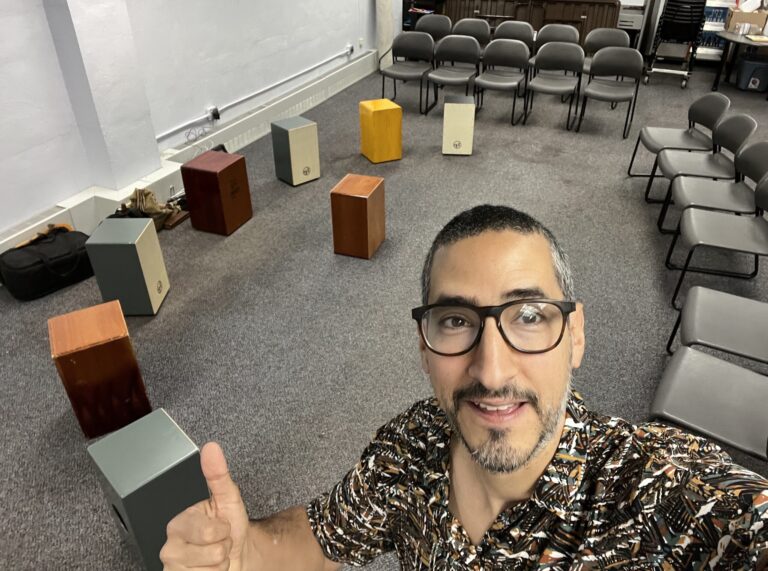
Cajón (box drums): Heartbeat of Africa in Peru and The Americas Workshop
 Learn More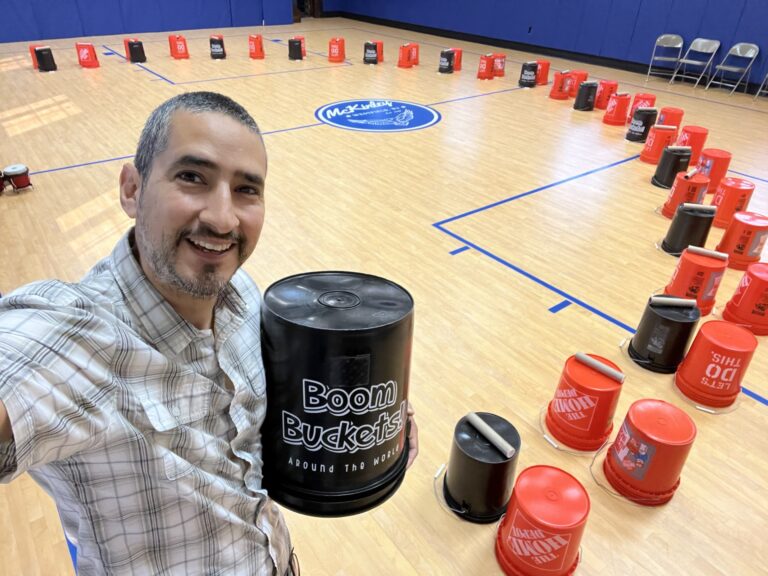
Boom Buckets Around the World!
Learn More 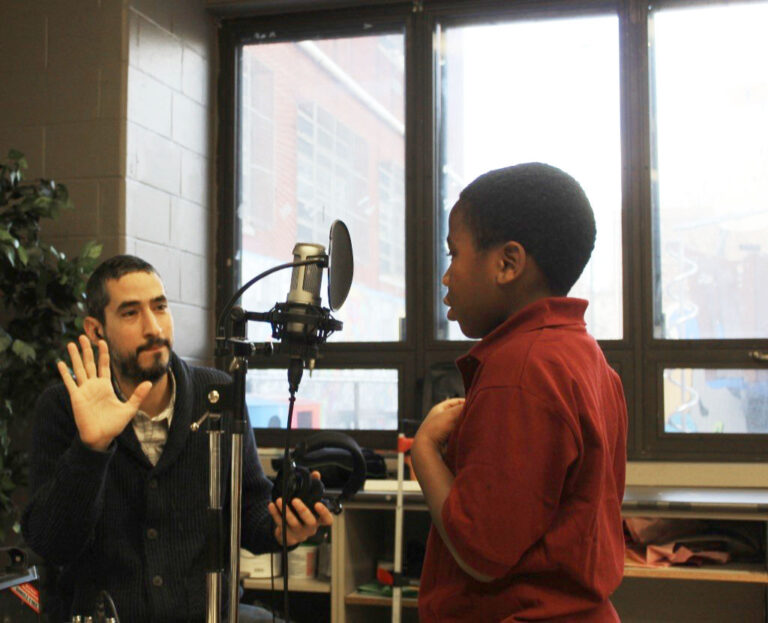
Progressive Percussion & Mindfulness Professional Learning
Learn More